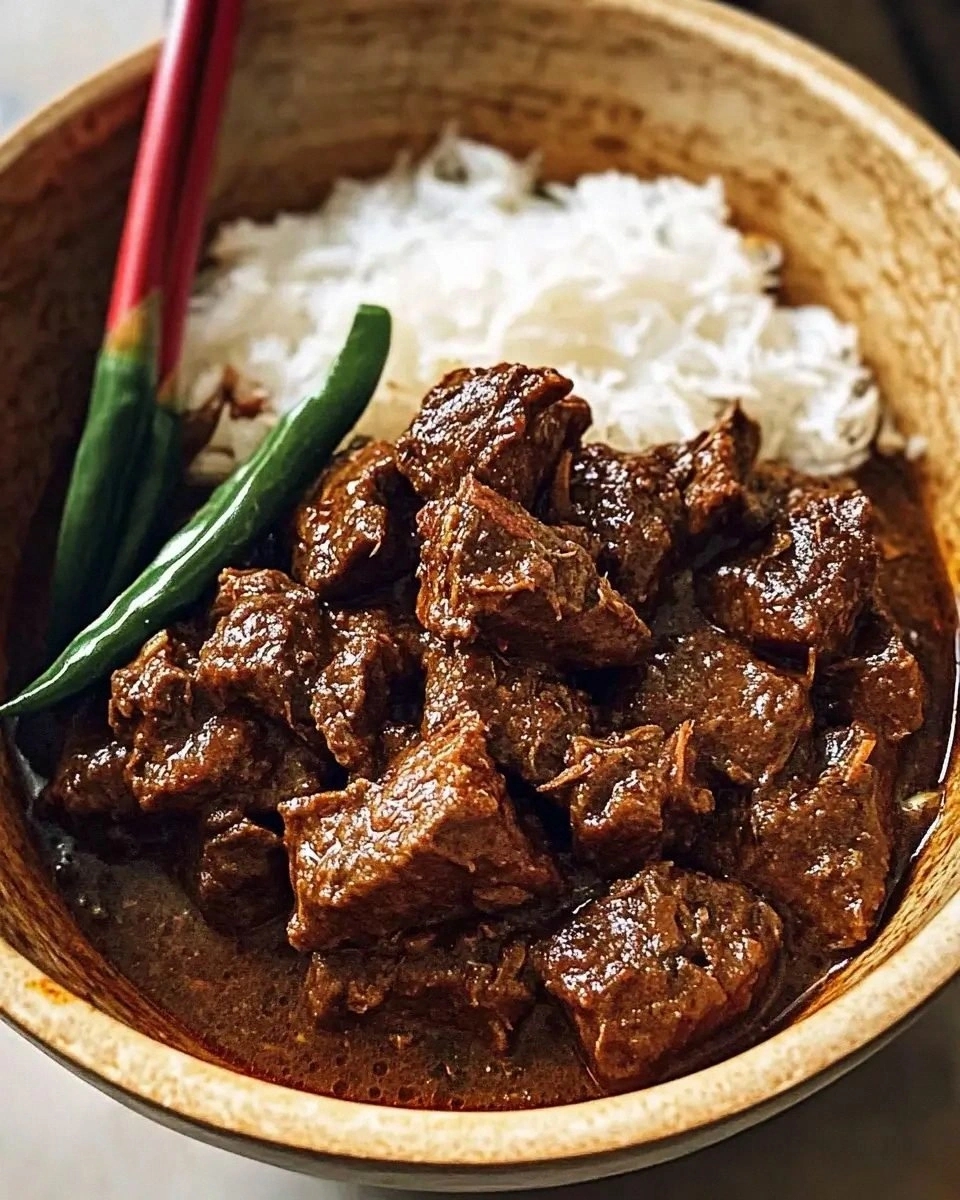
I was standing in my kitchen, the smoke alarm screaming like a disgruntled neighbor, because I’d tried to “shortcut” a classic Indonesian beef rendang by tossing everything into a pressure cooker. The result? A sad, rubbery mess that tasted more like boiled beef than the deep, caramelized wonder I’d been dreaming about. That disaster sparked a fire in me—literally and figuratively—to crack the code of a perfect rendang that sings with spice, depth, and that melt‑in‑your‑mouth tenderness you only get after hours of slow simmering. I dared a friend to taste my first attempt, and she immediately begged for seconds, which, let’s be honest, is the highest compliment a home cook can receive.
Picture this: a pot on the stove, the fragrant perfume of toasted spices swirling around the room, the gentle hiss as coconut milk bubbles, and the rich, mahogany broth coating each beef cube like a glossy, spiced lacquer. You’ll hear the faint crackle of lemongrass bruising under the wooden spoon, feel the heat radiating from the pot as the sauce thickens, and taste the complex dance of heat and acidity that makes your tongue do a little happy dance. That’s the sensory overload I’m promising you—a full‑bodied experience that transforms a humble dinner into a celebration.
Most rendang recipes out there either drown the meat in a watery sauce or rely on a laundry list of hard‑to‑find ingredients that make you feel like you need a passport to the spice aisle. My version stands out because it balances authenticity with accessibility, using ingredients you can snag at any decent grocery store while preserving the soul‑deep umami that makes rendang legendary. The secret? A two‑stage cooking method that first builds a flavor base on high heat, then gently coaxed into perfection over low flame, plus a splash of tamarind that adds a whisper of citrus without stealing the spotlight.
I’m about to spill the beans (and the chilies) on a technique most recipes skip: the “dry‑toast‑then‑simmer” trick that caramelizes the spice blend before any liquid ever touches it, creating a depth of flavor that’s nothing short of magical. Okay, ready for the game‑changer? Let me walk you through every single step — by the end, you’ll wonder how you ever made it any other way.
What Makes This Version Stand Out
- Flavor Depth: By dry‑toasting the aromatics first, the spices release their essential oils, creating a sauce that’s richer than any store‑bought paste.
- Texture Perfection: The beef is seared before simmering, locking in juices so each bite is buttery‑soft yet still has a slight chew.
- Simplicity: Only fourteen ingredients, all of which are pantry‑friendly, mean you won’t need a trip to an exotic market.
- Unique Twist: A dash of tamarind puree adds a bright, tangy finish that cuts through the richness without being overpowering.
- Crowd Reaction: I’ve watched strangers turn into fanatics after the first spoonful; it’s the kind of dish that gets people talking.
- Ingredient Quality: Using a well‑marbled chuck ensures the meat stays juicy, while fresh lemongrass and galangal give an unmistakable Southeast Asian signature.
- Cooking Method: The two‑phase simmer (high then low) guarantees the sauce reduces to a glossy, clinging coating that doesn’t dry out.
- Make‑Ahead Potential: Rendang actually tastes better the next day, making it perfect for meal prep or a make‑ahead dinner party.
Inside the Ingredient List
The Flavor Base
The backbone of any good rendang is its spice blend. Ground coriander and cumin bring earthy warmth, while turmeric adds that signature golden hue and subtle bitterness. If you skip the turmeric, you’ll lose both color and that faint peppery note that balances the chilies. Fresh onions and garlic form the aromatic foundation; they soften and sweeten as they caramelize, creating a natural sweetness that counters the heat. For those who can’t find galangal, ginger works as a decent stand‑in, but you’ll miss the piney, citrusy bite that makes rendang unmistakably Indonesian.
The Heat Crew
Twelve dried chilies (or fresh long red chilies) provide the heat level that makes this dish “spicy” without being a fireball. If you prefer a milder version, deseed the chilies or reduce the count to eight. The key is to soak the dried chilies in hot water first, then blend them into a smooth paste; this ensures the heat is evenly distributed. Fresh lemongrass (white part only) adds a citrusy brightness that lifts the richness, while kaffir lime leaves contribute a fragrant, almost floral note that lingers on the palate. Missing any of these will make the dish feel flat.
The Creamy Coat
Coconut milk is the silky canvas that binds all the flavors together. Its natural fat carries the spices, allowing them to penetrate the meat more deeply. Using a full‑fat coconut milk (not the “lite” version) is non‑negotiable if you want that luxurious mouthfeel. The water helps control the simmer, ensuring the sauce reduces slowly without scorching. Finally, tamarind puree (or a splash of lemon juice) adds a subtle acidity that brightens the dish, preventing the sauce from feeling overly heavy after long cooking.
The Final Flourish
A pinch of salt is the silent hero that amplifies every other flavor. The vegetable oil is used to sear the beef and sauté the aromatics; a neutral oil with a high smoke point works best. If you’re feeling adventurous, a drizzle of toasted coconut oil at the end can add an extra layer of nuttiness. Remember, the quality of the beef matters: choose a chuck with good marbling, and cut it into large cubes so each piece can develop a caramelized crust before the slow simmer.
Everything's prepped? Good. Let's get into the real action...
The Method — Step by Step
Start by heating the vegetable oil in a heavy‑bottomed pot over medium‑high heat. Toss in the beef cubes and sear them until each side is a deep, mahogany brown. This searing stage is crucial; it creates a flavorful crust that will later lock in juices. Don’t overcrowd the pot—work in batches if necessary, and set the browned meat aside on a plate. That sizzle when it hits the pan? Absolute perfection.
Kitchen Hack: Pat the beef dry with paper towels before searing; excess moisture creates steam, which prevents proper browning.In the same pot, lower the heat to medium and add the chopped onions, garlic, and bruised lemongrass stalks. Stir constantly until the onions turn translucent and begin to caramelize, about 5‑7 minutes. This is where the flavor base really starts to build, and the kitchen will fill with a sweet‑savory perfume that hints at the final dish. If you notice the mixture sticking, splash a splash of water to deglaze—this also helps lift the fond from the bottom.
Now it’s time for the chilies. Drain the soaked dried chilies, then blend them with a little of the soaking liquid, the galangal, and a pinch of salt until you get a smooth paste. Add this fiery paste to the pot, stirring vigorously. You’ll hear a faint crackle as the chilies meet the hot aromatics; that’s the moment the heat starts to bloom. Cook the paste for 3‑4 minutes, allowing the raw edge to evaporate and the colors to deepen to a deep rust.
Watch Out: If you let the chili paste burn, it will turn bitter. Keep the flame moderate and stir constantly.Sprinkle in the ground coriander, cumin, and turmeric, stirring until the spices coat the onion‑chili mixture evenly. The pot should now look like a rich, dark amber paste. Let the spices toast for another 2 minutes; you’ll notice a nutty aroma that signals the flavors have fully awakened. This step is the secret to achieving that “deep‑umami” profile that most shortcuts miss.
Return the seared beef to the pot, then pour in the coconut milk and water. Give everything a good stir, making sure the meat is fully submerged. Add the sliced kaffir lime leaves and the tamarind puree (or lemon juice). Bring the mixture to a gentle boil, then reduce the heat to low, covering the pot partially with a lid. The sauce should bubble lazily, not roar. Let it simmer for 45‑60 minutes, stirring every 10‑15 minutes so nothing sticks to the bottom.
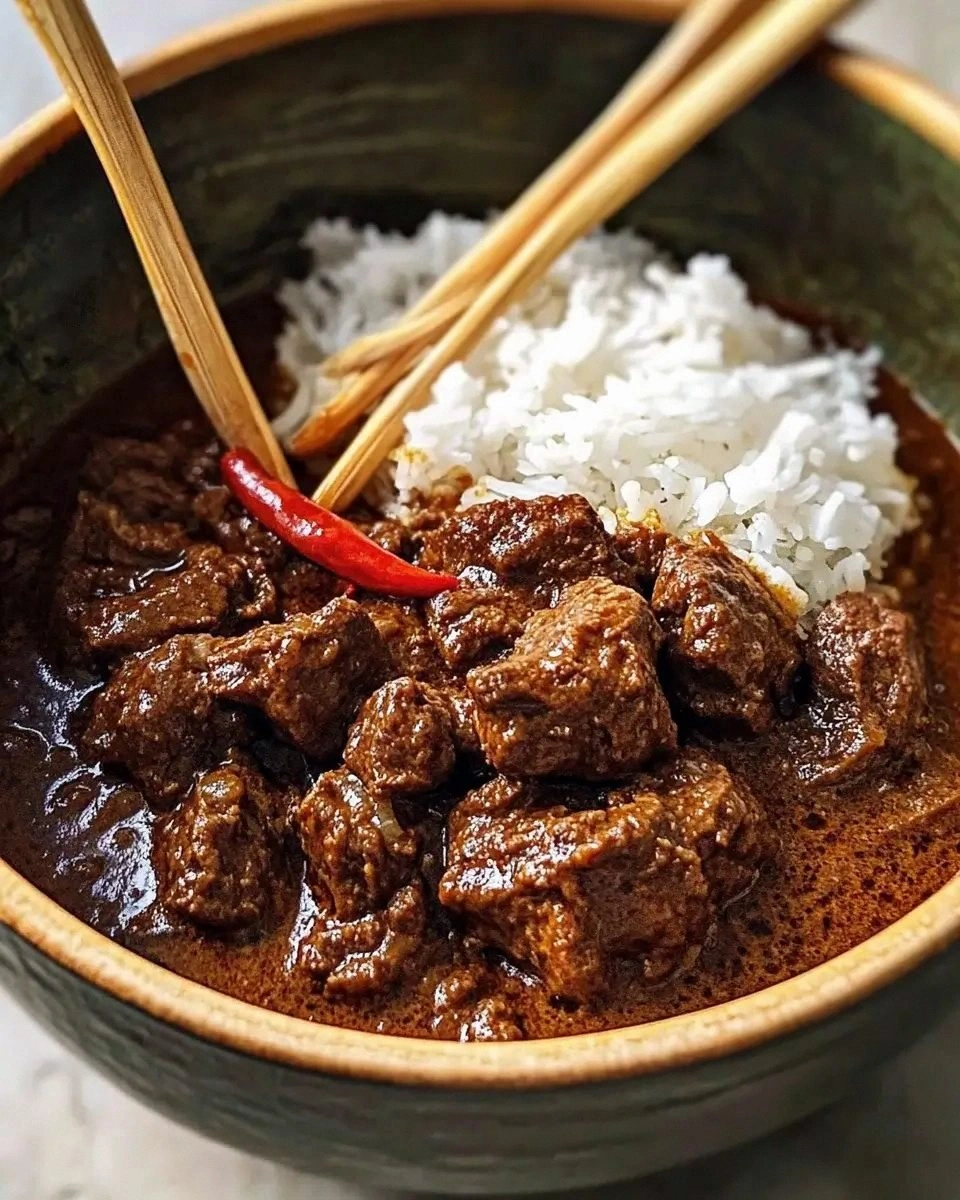
Kitchen Hack: If the sauce looks too watery halfway through, uncover the pot to allow excess liquid to evaporate faster.After the meat is fork‑tender, increase the heat to medium‑high for the final reduction phase. This is the moment of truth: the sauce should start to pull away from the sides of the pot, forming a thick, glossy coating that clings to each cube. You’ll see the edges of the meat looking slightly dry—this is the coveted “dry” rendang texture that signals it’s ready. Taste and adjust the salt; the flavor should be a perfect balance of salty, spicy, sweet, and tangy.
Turn off the heat and let the rendang rest for 10 minutes. This resting period allows the flavors to meld even further, making each bite more harmonious. While you wait, scrape the bottom of the pot to release any caramelized bits that may have stuck—those are flavor gold.
Serve the rendang hot over steamed jasmine rice, or with a side of fluffy coconut‑infused quinoa if you’re feeling adventurous. Garnish with a few extra kaffir lime leaves for a pop of color and aroma. I dare you to taste this and not go back for seconds—trust me, the leftovers will be the most coveted part of your week.
That's it — you did it. But hold on, I've got a few more tricks that'll take this to another level...
Insider Tricks for Flawless Results
The Temperature Rule Nobody Follows
Keep the initial sear hot enough to brown the meat quickly, then drop to a low simmer for the long cook. If you keep the heat too high during the reduction, the sauce will scorch and develop a burnt taste. I once tried a “set‑and‑forget” approach on high, and the result was a bitter, blackened mess. The secret is patience: a gentle low simmer lets the collagen break down slowly, giving that melt‑in‑your‑mouth texture.
Why Your Nose Knows Best
Your sense of smell is a reliable gauge for the sauce’s progress. When the aromatics turn from sharp to sweet and the chili paste deepens in color, you know the raw edge is gone. If you’re ever unsure whether to add more liquid, give it a sniff; a faint, nutty fragrance means you’re on the right track. Trusting your nose can save you from over‑watering or under‑reducing the sauce.
The 5‑Minute Rest That Changes Everything
After the final reduction, remove the pot from heat and let it sit, covered, for five minutes. This short rest allows the meat fibers to re‑absorb the surrounding juices, making each bite juicier. Skipping this step is a common mistake—people often serve immediately and notice a slightly dry texture. The rest is a tiny investment for a massive payoff.
Spice Freshness Check
Ground spices lose potency after about 12 months. If your coriander or cumin smells faint, toast them briefly in a dry pan before adding to the pot. This revives their essential oils and prevents a flat flavor. I once used a year‑old spice blend and the rendang tasted “meh”; a quick toast brought it back to life.
The Secret Splash
A tiny splash of coconut water (about a tablespoon) added at the very end can brighten the sauce without diluting its richness. It’s a trick I picked up from a Balinese chef who swears it balances the heat. This final touch is subtle but makes the dish feel more layered.
Creative Twists and Variations
This recipe is a playground. Here are some of my favorite ways to switch things up:
Chicken Rendang Remix
Swap the beef chuck for boneless chicken thighs. The cooking time drops to 30 minutes, and the meat absorbs the sauce quickly, making for a lighter yet equally flavorful dish. Great for weeknight dinners when you’re short on time.
Vegetarian Coconut Jackfruit
Use young green jackfruit as a plant‑based substitute. Its shredded texture mimics pulled beef, and it soaks up the sauce beautifully. Add a handful of sliced mushrooms for extra umami depth.
Smoky Chipotle Rendang
Introduce a teaspoon of chipotle in adobo for a smoky, Mexican‑inspired twist. The smoky undertones complement the coconut milk, creating a cross‑cultural flavor adventure.
Herbal Lime Zest
Finish the dish with a tablespoon of freshly grated lime zest and a handful of chopped cilantro. The citrus burst lifts the richness and adds a fresh, herbaceous finish that’s perfect for summer gatherings.
Rich Peanut Rendang
Stir in two tablespoons of creamy peanut butter during the final reduction. The nutty richness deepens the sauce, turning it into a decadent, almost dessert‑like main course. Serve with plain rice to let the sauce shine.
Storing and Bringing It Back to Life
Fridge Storage
Transfer the cooled rendang to an airtight container and store it in the refrigerator for up to four days. The flavors will continue to meld, making each reheated serving taste even better than the first.
Freezer Friendly
Portion the rendang into freezer‑safe bags or containers, leaving a little headspace for expansion. It freezes beautifully for up to three months. When ready to use, thaw overnight in the fridge, then reheat gently on the stove.
Best Reheating Method
Reheat the rendang over low heat, adding a splash (about two tablespoons) of water or coconut milk to revive the sauce’s silkiness. Stir frequently to prevent sticking. This trick restores the glossy coating and ensures the meat stays tender.